Your Website Isn’t Broken. Your Strategy Is.

You’ve redesigned your website twice in five years. Traffic is fine, the CMS is newer, and your team finally stopped complaining about the old layout. And somehow, it still doesn’t feel like it’s working. Leads aren’t coming in the way you’d hoped. The site looks polished but it reads like a brochure. You’re already wondering if it’s time again.
The problem probably isn’t your website.
The Redesign Trap
Redesigns are easy to greenlight. They’re visible, they’re fundable, and they give everyone a sense of forward momentum. A new site feels like progress, and for a few months after launch, it is.
But a redesign built on top of an unclear content strategy is still an unclear site. It just has better typography. The organizations we work with most often don’t have a design problem. They have a clarity problem: unclear about who the site is actually for, what those people need to do when they get there, and whether the content on the page supports either of those things.
When those questions go unanswered, every redesign cycle produces the same result. A cleaner version of something that still isn’t quite working.
What We Look for Before We Touch a Wireframe
Our process starts earlier than most agencies are comfortable going. Before we talk about visual direction or CMS preferences, we ask the questions that determine whether a redesign is even the right investment.
Who is this site actually serving, and is it designed around their needs or yours?
What do you want each audience to do, and does your current content make that path clear?
When something changes in your organization — a new program, a leadership shift, a funding pivot — can your team update the site without calling an agency?
These aren’t gotcha questions. They’re the difference between a project that delivers lasting value and one that kicks the problem three years down the road. The organizations that get the most out of working with us are the ones willing to sit with the answers honestly before a single wireframe is drawn.
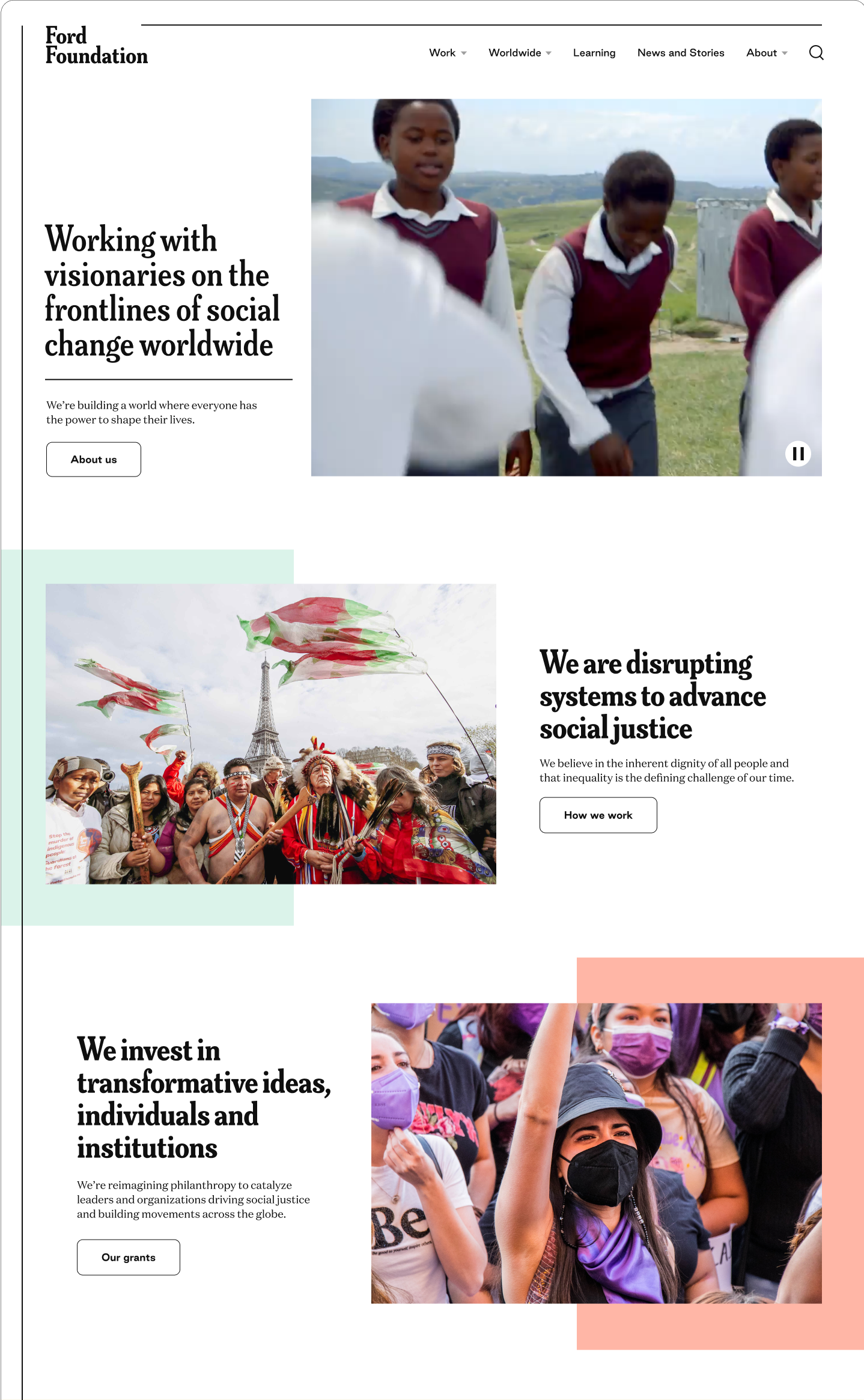
What We Learned from the Ford Foundation
When we partnered with the Ford Foundation, the most valuable work we did wasn’t visual. It happened upstream. We worked directly with their communications team to rethink how content was structured, how it mapped to different audiences, and critically, who inside the organization owned what.
The outcome was a site their team could actually maintain and evolve without coming back to an agency every time something needed to change. That’s not a small thing. It means the site stays current, stays accurate, and keeps reflecting how the organization actually thinks rather than how it thought when the project launched.
That’s what a real digital partnership looks like. Not handing over a finished product, but building something your team can carry forward.
Strategy or Redesign: A Few Questions Worth Asking
Before your next project brief goes out, run through these honestly.
- Does your team agree on who your primary audience is and what you want them to do?
- If you pulled three colleagues into a room and asked them separately, would the answers match?
- When a new program or initiative launches, does getting it onto the site feel straightforward, or does it always turn into a heavier lift than it should?
- Is your current site something you’re proud to send to a major donor, a partner, or a candidate you’re trying to recruit?
If the honest answer to any of these is no, that’s worth examining before you invest in another redesign. You may not need a new site. You may need a clearer strategy for the one you have.
Start With a Conversation, Not a Commitment
The best digital investment you can make is one your team understands, can maintain, and that actually reflects how your organization thinks and works. If you’re not sure your current site does that, we’d like to help you figure it out.
We offer a free strategy audit: a focused, no-pressure conversation to help you understand what you actually need before committing to anything. No pitch deck, no proposal. Just a clearer picture of where you are and where to go next.
Let’s talk. Schedule your free strategy audit →
Related Insights