What Makes the Best SEO Strategy?: What Works and How It Varies by Goal
What Is the Best SEO Strategy? Key Elements and How They Vary by Goal
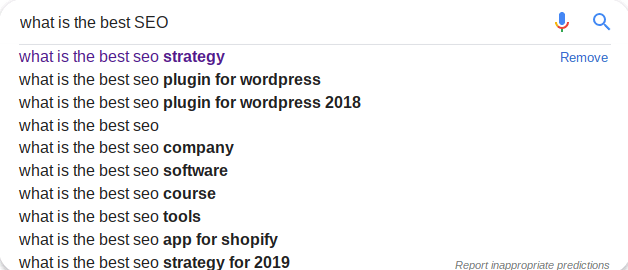
If you search for the “best SEO strategy,” you’ll find countless checklists, tactics, and opinions. But the reality is simpler—and more complex—than that. There is no single SEO strategy that works best for every website.
The most effective SEO strategies are built around specific goals, audiences, and business contexts. What works for a new website trying to gain visibility will look very different from a strategy focused on scaling traffic for an established brand or driving conversions for an e-commerce business.
Instead of looking for a one-size-fits-all approach, the focus should be on understanding what makes an SEO strategy effective—and how it should adapt based on your needs.
Key Takeaways
- The best SEO strategy is one that aligns with your specific goals, audience, and website maturity
- Effective strategies combine technical SEO, content, on-page optimization, and authority building
- SEO is not one-size-fits-all. Approaches vary for new websites, local businesses, e-commerce, enterprise sites, and more
- Content quality and search intent alignment are central to modern SEO success
- Strong SEO strategies are data-driven, iterative, and long-term
- The most successful approaches evolve alongside search engines, competition, and user behavior
What Is an SEO Strategy?
An SEO strategy is a comprehensive plan for improving a website’s visibility in search engines. It goes beyond individual tactics like keyword targeting or link building and focuses on how all elements of a website work together to drive organic traffic and achieve business goals.
A strong SEO strategy typically includes several interconnected components:
- Technical SEO, which ensures search engines can crawl and index your site effectively
- Content strategy, which focuses on creating valuable, relevant content
- On-page optimization, which improves how individual pages are structured and presented
- Authority building, which strengthens credibility through backlinks and brand signals
The key distinction is that strategy is not about isolated actions—it’s about how these elements align and reinforce each other over time.
What Makes the “Best” SEO Strategy?
The “best” SEO strategy is not defined by a specific tactic or framework. It is defined by how well it aligns with your goals and how effectively it delivers results. At its core, a strong SEO strategy includes several defining characteristics:
- Alignment with business objectives: Whether the goal is lead generation, revenue, traffic growth, or brand awareness, SEO should directly support those outcomes.
- Understanding of search intent: Content should match what users are actually looking for—not just the keywords they use.
- A strong technical foundation: Fast, accessible, and well-structured websites perform better in both search rankings and user experience.
- High-quality, differentiated content: Content should provide real value, not just replicate what already exists.
- Authority and trust signals: Backlinks, brand recognition, and domain authority all contribute to visibility.
- Continuous optimization: The best strategies evolve based on performance data and changing conditions.
When these elements work together, SEO becomes a sustainable driver of growth rather than a collection of disconnected efforts.
Core Components of an Effective SEO Strategy
While SEO strategies vary, most successful approaches are built on a shared foundation. These core components work together to improve visibility and performance.
Technical SEO
Technical SEO ensures that your website can be properly crawled, indexed, and understood by search engines. This includes factors like site speed, mobile responsiveness, URL structure, and overall site architecture. Without a solid technical foundation, even the best content may struggle to perform.
Keyword and Search Intent Research
Understanding what your audience is searching for—and why—is essential. Keyword research helps identify opportunities, while search intent ensures that content aligns with user expectations. Modern SEO prioritizes intent over volume, focusing on relevance rather than just rankings.
Content Strategy
Content is at the center of most SEO efforts. A strong content strategy focuses on creating useful, relevant, and well-structured content that addresses user needs. This includes blog posts, landing pages, guides, and other formats designed to attract and engage users.
On-Page SEO
On-page optimization ensures that individual pages are structured in a way that supports both search engines and users. This includes titles, headings, internal linking, and content formatting. Well-optimized pages are easier to understand, navigate, and rank.
Link Building and Authority
Search engines use backlinks as a signal of trust and authority. Building high-quality links from reputable sources helps improve domain authority and visibility. This process often involves outreach, partnerships, and content-driven link earning.
Analytics and Performance Tracking
SEO is an ongoing process that requires measurement and adjustment. Tracking metrics such as traffic, rankings, and conversions helps identify what’s working and where improvements are needed.
Why There Is No Single Best SEO Strategy
One of the most important things to understand about SEO is that context matters. While best practices exist, they are not universally applied in the same way across every website or organization.
Every website operates within a unique set of conditions. Industry competition, audience expectations, existing domain authority, and internal resources all shape what is possible—and what is effective. A strategy that delivers strong results for one organization may underperform for another simply because the starting point is different.
For example, a well-established website with high domain authority can compete for broad, competitive keywords much more easily than a new site. Similarly, a local business targeting a specific geographic area will approach SEO very differently than a national or global brand.
Several key factors influence how an SEO strategy should be developed:
- The size and maturity of the website: New websites often need to focus on building foundational content and authority, while established sites can prioritize optimization and expansion
- The competitiveness of the target keywords: Highly competitive industries require more investment in content depth, authority building, and long-term strategy
- The complexity of the products or services offered: More complex offerings often require more educational content and longer user journeys
- The resources available for content and development: The best strategy is one that can be executed consistently—ambitious plans without the resources to support them rarely succeed
These variables don’t just influence tactics—they shape the entire direction of the strategy. That’s why there is no universal blueprint for success.
The “best” SEO strategy is always relative. It’s defined by how well it aligns with your specific situation, adapts to your constraints, and supports your long-term goals—not by how closely it follows a generic set of recommendations.
How SEO Strategy Changes Based on Your Goals
While the core principles of SEO—technical performance, content quality, and authority—remain consistent, the way those principles are applied can vary significantly depending on what you are trying to achieve.
Different goals require different priorities. In some cases, the focus is on building visibility from scratch. In others, it’s about scaling existing performance, improving conversions, or strengthening authority in a competitive space. Understanding this distinction is critical because applying the wrong type of strategy can limit results even if the execution is strong.
For example, common variations in SEO strategy vary depending on the following scenarios:
- Best SEO strategy for new websites: New websites typically start with little to no authority, which means early efforts focus on building a foundation. This includes ensuring proper indexing, creating initial content, targeting less competitive keywords, and gradually establishing credibility through consistent publishing and early link building.
- Best SEO strategy for increasing website traffic: For sites that already have some visibility, the focus often shifts to expansion. This includes identifying content gaps, targeting additional keyword opportunities, improving internal linking, and updating existing content to capture more traffic over time.
- Best SEO link-building strategy: In more competitive environments, authority becomes a key differentiator. Link-building strategies may focus on earning high-quality backlinks through content, partnerships, digital PR, and outreach efforts that strengthen domain credibility.
- Best local SEO strategy: Local SEO strategies prioritize visibility within a specific geographic area. This involves optimizing local listings, targeting location-based keywords, managing reviews, and ensuring consistency across directories and platforms.
- Best SEO strategy for e-commerce websites: E-commerce SEO focuses heavily on product and category optimization, site structure, and technical performance. It also requires balancing SEO with user experience to support both discovery and conversion.
Each of these approaches – and many other not mentioned here – builds on the same foundational elements, but the emphasis shifts based on the desired outcome. A strategy focused on traffic growth will look different from one focused on lead generation or local visibility, even if they share similar components.
Ultimately, the most effective SEO strategies are those that are clearly aligned with specific goals. Rather than trying to do everything at once, they prioritize the areas that will have the greatest impact—and evolve as those goals change over time.
How to Build the Best SEO Strategy for Your Website
Building an effective SEO strategy starts with clarity. Before focusing on tactics, organizations need to understand what they are trying to achieve, who they are trying to reach, and how their current website is performing.
Rather than jumping straight into keyword targeting or content creation, the process should begin with a structured evaluation of goals and opportunities. This ensures that SEO efforts are aligned with broader business objectives and not just isolated metrics.
A strong foundation typically includes:
- Identifying business objectives and key performance indicators: SEO should support measurable outcomes, whether that’s generating leads, increasing traffic, or improving visibility for specific services or products.
- Understanding your audience and their search behavior: This involves identifying how users search, what questions they ask, and what type of content they expect to find. Effective strategies are rooted in real user needs, not assumptions.
- Conducting a comprehensive website and content audit: Evaluating existing content, technical performance, and site structure helps identify strengths, gaps, and opportunities for improvement.
- Prioritizing opportunities based on impact and feasibility: Not all SEO efforts deliver equal value. Focusing on high-impact initiatives first helps drive meaningful results more efficiently.
- Developing a roadmap that integrates technical, content, and authority efforts: SEO is most effective when these elements work together. A clear roadmap ensures that efforts are coordinated rather than siloed.
From there, the focus shifts to execution and iteration. The best SEO strategies are not static—they evolve over time based on performance data, changes in search behavior, and shifts in the competitive landscape.
Ultimately, the goal is to build a strategy that is both structured and adaptable. One that provides a clear direction while still allowing for flexibility as new opportunities emerge.
Common Mistakes That Undermine SEO Strategy
Even well-intentioned SEO efforts can fall short if they overlook foundational elements or focus too narrowly on individual tactics. In many cases, it’s not a lack of effort that causes underperformance—it’s misalignment between strategy, execution, and user expectations.
One of the most common issues is approaching SEO as a checklist rather than a cohesive system. When teams prioritize isolated tactics without considering how they work together, the result is often fragmented performance and missed opportunities. Some of the most frequent mistakes include:
- Focusing too heavily on keywords without considering search intent: Ranking for a keyword is only valuable if the content satisfies what users are actually looking for. Pages that don’t align with intent may attract traffic but fail to engage or convert.
- Ignoring technical SEO issues that limit visibility: Problems with site speed, indexing, crawlability, or mobile usability can prevent even high-quality content from performing. Technical SEO is often invisible when done well—but highly impactful when neglected.
- Producing low-quality or repetitive content: Creating content at scale without differentiation can dilute your site’s authority. Search engines increasingly prioritize depth, originality, and usefulness over volume.
- Neglecting internal linking and site structure: Without a clear structure, content exists in isolation. Internal linking helps search engines understand relationships between pages and guides users toward relevant information.
- Expecting immediate results from a long-term strategy: SEO takes time. Organizations that expect quick wins often shift strategies too early or abandon efforts before they have a chance to compound.
These mistakes are often interconnected. For example, a lack of clear strategy can lead to both weak content and poor site structure. Avoiding them requires a more holistic approach—one that balances technical performance, content quality, and long-term consistency.
SEO Strategy Is an Ongoing Process, Not a One-Time Effort
SEO is not something you implement once and then forget. It requires ongoing attention, iteration, and refinement.
Search engine algorithms evolve, competitors adjust their strategies, and user behavior changes over time. As a result, even successful strategies need to be revisited and updated regularly.
Organizations that treat SEO as a long-term investment—rather than a one-time project—are more likely to see sustained results. The best SEO strategies are not static. They are built to adapt, improve, and grow alongside your business. WDG helps organizations develop and refine SEO strategies that balance technical performance, content quality, and long-term scalability. Contact us today to get started!
Frequently Asked Questions About SEO Strategy
What is the best SEO strategy?
The best SEO strategy is one that aligns with your goals, audience, and website structure. There is no universal approach that works for every situation.
How long does it take for an SEO strategy to work?
SEO typically takes several months to show meaningful results, depending on competition, website authority, and consistency of effort.
What are the most important parts of SEO?
Technical SEO, content quality, search intent alignment, and authority building are all critical components.
Can one SEO strategy work for every website?
No. SEO strategies must be tailored to the specific needs, goals, and context of each website.
How often should you update your SEO strategy?
SEO strategies should be reviewed and refined regularly based on performance data and changes in the search landscape.
Related Insights